
Table of Contents
Concrete formwork Vancouver projects depend on accurate planning before the concrete truck arrives. Whether you are building a driveway, slab, footing, sidewalk, retaining wall, or commercial pad, the formwork controls shape, depth, line, and stability during the pour. If you are already planning a project and need supply support, your best early next step is to request a quote.
What is concrete formwork?
Concrete formwork is the temporary or permanent mold that holds fresh concrete in place until it gains enough strength to support itself. In practical terms, it defines the final dimensions, alignment, and finish of the concrete element. For most concrete formwork Vancouver projects, the form system must match the structure, the pour sequence, site access, and the expected concrete pressure.
Why good formwork matters
Good formwork affects more than shape. It influences finish quality, crew efficiency, material waste, and the risk of movement during the pour. Poor formwork can lead to uneven edges, incorrect slab depth, out-of-level surfaces, and expensive rework. That is why formwork and concrete delivery should be planned together rather than treated as separate tasks.
Common types of formwork used in Vancouver
Choosing the right formwork system can affect the speed of installation, the quality of the finished concrete, and the overall efficiency of the pour. In Vancouver, the best option often depends on the size of the project, the complexity of the layout, the desired surface finish, and the pressure the forms must handle during placement. The comparison below gives you a quick overview of the most common formwork systems used in local residential and commercial concrete projects.
Common Types of Formwork Used in Vancouver
Timber Formwork
Best for small residential pours
- Common use: patios, walkways, curbs, driveways
- Main advantage: flexible and cost-effective
- Watch out for: poor bracing and uneven alignment
- Best fit: simple layouts with smaller budgets
Plywood Formwork
Best for smoother visible surfaces
- Common use: slabs, stairs, walls
- Main advantage: cleaner and more uniform finish
- Watch out for: weak backing can cause bowing
- Best fit: projects where appearance matters
Steel or Aluminum Formwork
Best for larger or repetitive pours
- Common use: commercial work, repeated layouts
- Main advantage: durable, reusable, and accurate
- Watch out for: higher upfront cost
- Best fit: projects needing speed and consistency
Wall and Slab Systems
Best for structural pours
- Common use: walls, suspended slabs, large pads
- Main advantage: controls shape under high pressure
- Watch out for: layout errors become expensive fast
- Best fit: jobs that require tighter control
Quick Comparison Table
| Formwork Type | Best For | Finish Quality | Flexibility | Reusability | Cost Level | Main Strength |
|---|---|---|---|---|---|---|
| Timber | Driveways, patios, curbs, walkways | Moderate | High | Low | $ | Easy to adjust on site |
| Plywood + Timber Frame | Slabs, stairs, walls | High | High | Moderate | $$ | Cleaner surface finish |
| Steel | Commercial and repetitive pours | High | Low | High | $$$ | Very strong and precise |
| Aluminum | Large projects with repeated layouts | High | Moderate | High | $$$ | Lighter than steel |
| Wall / Slab Systems | Structural walls and slab pours | High | Moderate | Moderate to High | $$$ | Handles higher concrete pressure |
Pro Tip for Vancouver Projects
Smaller residential pours often use timber or plywood systems because they are easier to modify on site. Larger walls, slabs, or repetitive layouts usually benefit from steel, aluminum, or more advanced wall and slab systems because they provide better consistency under pressure.
Timber formwork
Timber formwork is one of the most common options for smaller residential concrete projects in Vancouver. It is often used for patios, walkways, curbs, driveways, and small concrete pads. One of its main advantages is flexibility. Timber can be cut and adjusted on site more easily than more rigid systems, which makes it practical for custom shapes and smaller pours.
It is also relatively economical, which is why it is widely used for residential work. However, timber formwork must be braced and aligned carefully. If it shifts during the pour, it can affect the final shape, depth, and finish of the concrete. For that reason, timber formwork works best when the layout is simple and the crew can keep close control over the setup.
Plywood formwork
Plywood formwork is commonly used together with timber framing for slabs, stairs, walls, and other concrete elements that need smoother faces or more controlled shaping. In this system, the plywood creates the surface that touches the wet concrete, while the supporting frame holds everything in place.
A key benefit of plywood formwork is that it can produce a cleaner and more uniform finish when installed properly. This makes it useful for visible concrete surfaces where appearance matters. It is also versatile, since the plywood panels can be cut to suit different layouts. Still, proper support is essential. Without enough backing and bracing, the plywood can bow under concrete pressure and affect the final result.
Steel or aluminum formwork
Steel or aluminum formwork is more common on larger projects and on jobs where the same type of concrete pour is repeated many times. These systems are durable, reusable, and more consistent than basic wood-based forms. They are often chosen for commercial work, multi-phase construction, and projects that require tighter tolerances.
Steel formwork is especially strong and can handle higher concrete pressure, which makes it suitable for demanding structural applications. Aluminum formwork offers similar accuracy but is lighter, which can make handling and setup easier. Although these systems usually cost more at the beginning, they can save time and improve efficiency on larger or ongoing projects.
Wall and slab systems
Wall and slab systems require tighter control because the pressure of wet concrete increases quickly, especially in vertical pours. Even a small layout or bracing error can lead to movement, surface defects, or expensive rework. That is why these systems need more careful planning than smaller flatwork forms.
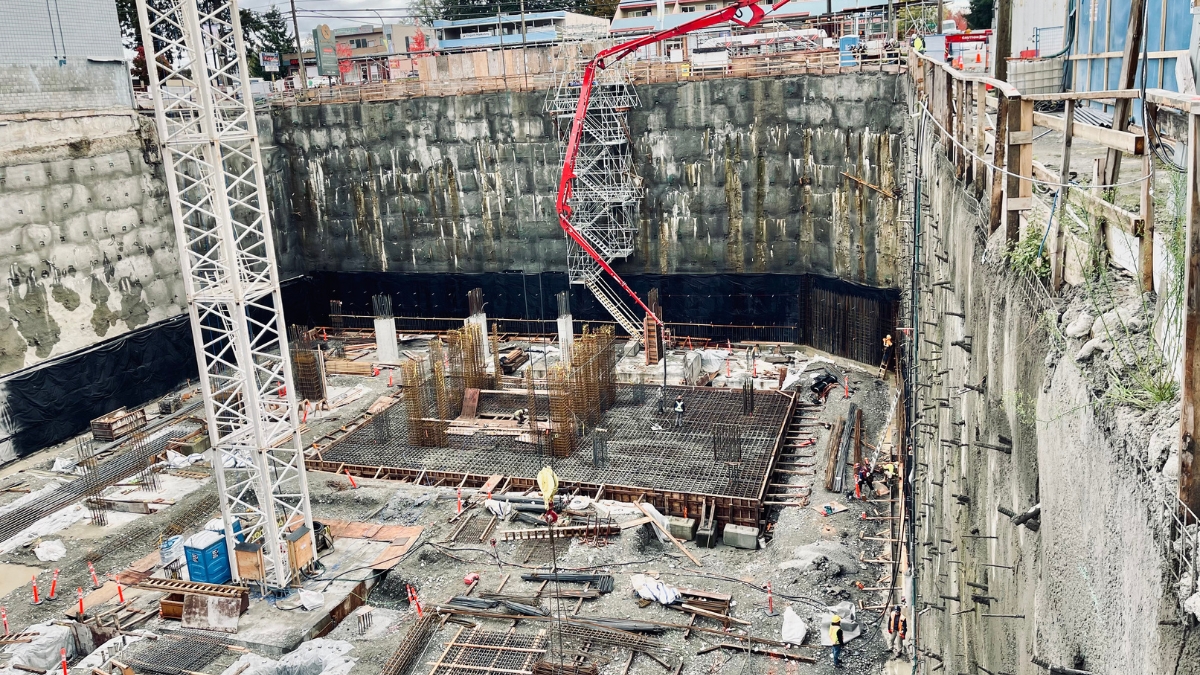
For slab systems, the formwork controls thickness, level, edge detail, and drainage slope. For wall systems, alignment and bracing are even more important because the concrete places strong lateral pressure on the forms. In larger concrete formwork Vancouver projects, wall and slab systems may require more advanced layouts or engineered support to maintain safety, accuracy, and finish quality throughout the pour.
How to plan a successful pour
A successful concrete formwork Vancouver job starts with layout, measurement, and coordination.
Check dimensions and elevations
Confirm width, depth, slope, and final elevation before concrete is ordered.
Confirm bracing and stability
Forms should remain rigid during placement. If they shift, the finished concrete may be out of tolerance.
Estimate the volume correctly
Before scheduling delivery, use the concrete calculator to estimate the quantity needed for your slab, footing, or wall. This is one of the most important internal links in the article because it supports both project planning and quote readiness.
Choose the right mix
Formwork planning should also consider strength requirements. If the project involves structural performance, slabs, or walls, link concrete strength MPa here so readers can understand how strength selection affects the pour.
Plan curing and protection
Good formwork is only part of the result. Placement, curing, and protection also affect durability and long-term performance. Link concrete facts here because it naturally supports that topic and keeps readers moving deeper into the resource section.
Mistakes to avoid
Many concrete formwork Vancouver problems come from avoidable issues:
- forms are not level before the truck arrives
- bracing is too weak
- the crew orders concrete before the site is ready
- reinforcement and embeds are not coordinated with the form layout
- curing is not planned in advance
Budgeting is another weak point. When readers are still evaluating costs, insert the link cost of concrete per yard in Vancouver in this section. It is strategically valuable because it supports users who are closer to ordering but still need pricing context.
How concrete supply affects formwork performance
Concrete formwork Vancouver planning should include supplier coordination early. The amount of concrete, jobsite access, delivery timing, and placement speed all influence whether the pour runs smoothly.
If this article is aimed mainly at homeowners, insert residential concrete service here. If the post is intended to attract contractors or larger commercial jobs, use concrete suppliers for commercial projects instead. That placement is strategic because this section is where readers move from education into service evaluation.
FAQ
1. What is concrete formwork?
Concrete formwork is the temporary or permanent structure used to hold fresh concrete in place until it gains enough strength to support itself. It helps control the shape, depth, alignment, and finish of the concrete.
2. What type of concrete formwork is best for residential projects in Vancouver?
For many residential projects in Vancouver, timber and plywood formwork are common because they are flexible, practical, and cost-effective for patios, driveways, walkways, and small slabs.
3. When should steel or aluminum formwork be used?
Steel or aluminum formwork is often used for larger or repetitive pours because it is durable, reusable, and more consistent. It is a strong option for commercial projects or jobs with tighter tolerances.
4. Why is formwork important before pouring concrete?
Formwork is important because it helps maintain the correct dimensions, supports the concrete during placement, and reduces the risk of movement, uneven surfaces, or costly rework.
5. How do I choose the right formwork system for my project?
The right system depends on the size of the pour, the complexity of the layout, the desired finish, the pressure the forms must handle, and the project budget. Smaller jobs often use timber or plywood, while larger structural pours may need more advanced systems.
6. Does concrete formwork affect the final finish?
Yes. The type and quality of formwork can affect the appearance, alignment, and consistency of the finished concrete. Better setup usually leads to better results.
7. What should I check before ordering concrete?
Before ordering concrete, check the form dimensions, bracing, alignment, elevations, reinforcement placement, and site access. It is also important to estimate the volume correctly and plan the pour sequence.
Final thoughts
Concrete formwork Vancouver projects perform better when layout, bracing, volume estimation, strength selection, and delivery timing are treated as one system. Good formwork is not only about containing wet concrete. It helps protect quality, schedule, and budget. End the article with request a quote as the final CTA, because that page is the clearest conversion destination on the site.