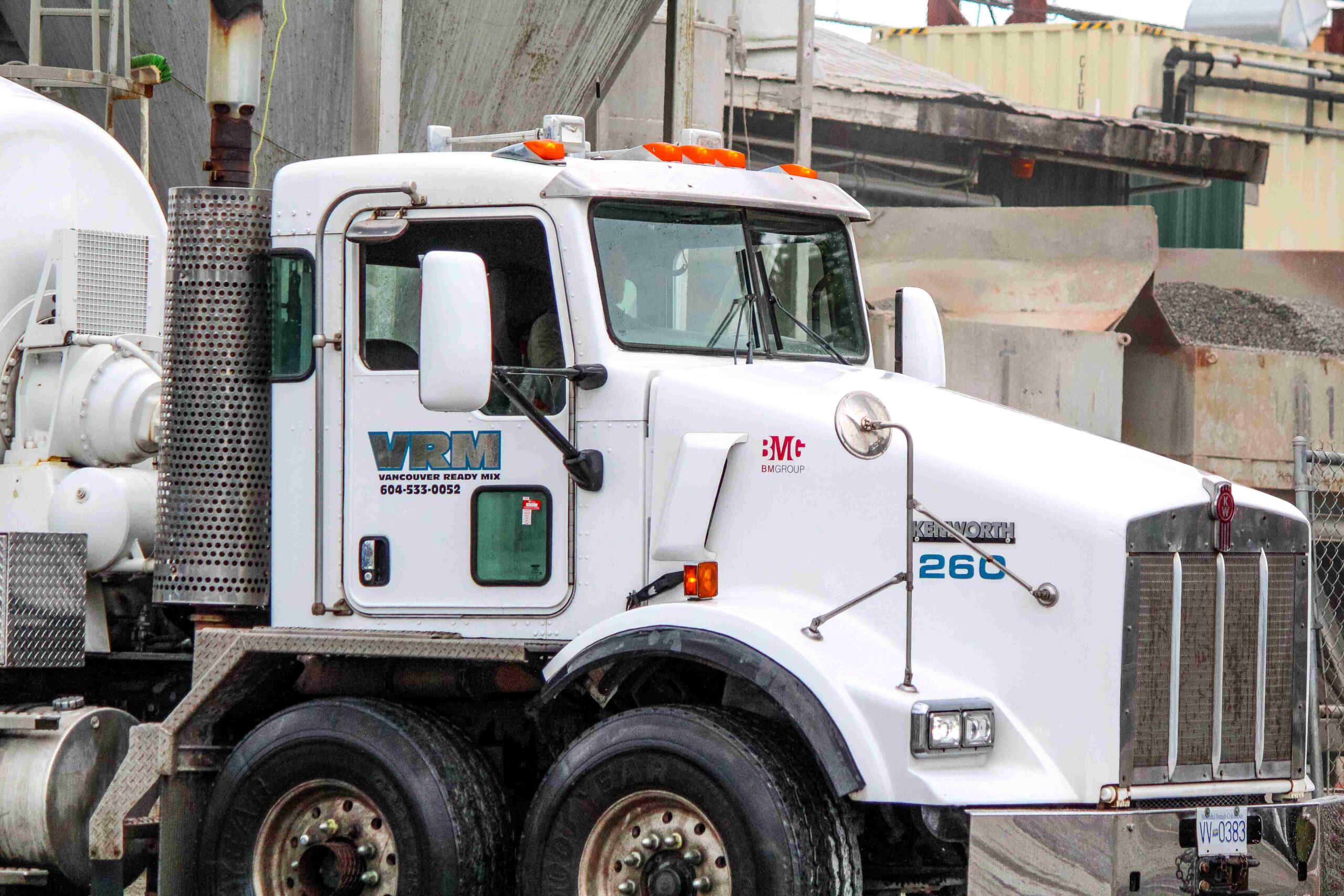
When ordering ready-mix concrete, the delivery method affects labour, schedule, access, cost, and final placement quality. For simple pours, concrete chute delivery is usually the fastest and most cost-effective option because the concrete truck can discharge directly into the forms.
However, the chute has a short working range and depends on gravity. Ready-mix trucks may carry up to three additional chutes, but those extensions still only help when the truck can safely get close to the pour area. If the truck cannot reach the forms, concrete pumping usually becomes the safer and more efficient choice.
For Metro Vancouver projects, Vancouver Ready Mix supplies ready-mix concrete for residential and commercial work. If you are planning a concrete pour this guide will help you decide whether chute delivery is enough or whether you should coordinate a concrete pump before pour day.
Use chute delivery when the truck can park close to the forms, the pour is flat and direct, and the concrete can flow downhill from the chute. Use a pump when distance, obstacles, elevation, weather, speed, or site protection make direct chute placement difficult.
| A Practical rule is simple: If the farthest part of the form is more than about 3 metres from where the truck can safely park, or if there is one major obstacle such as a fence, wall, basement opening, slope, or landscaped area, request a pump assessment before ordering the concrete. |
| Use concrete chute delivery when... | Use a concrete pump when... |
|---|---|
| The truck can park close to the forms, the chute can slope downward, and the crew can place the concrete within the normal unloading window. | The pour is far from the truck, behind obstacles, below grade, elevated, or too large to place efficiently with a chute and wheelbarrows. |
Concrete chute delivery is the standard gravity-fed method used by a ready-mix truck. The concrete exits the rotating drum and flows down the truck chute into the forms. Trucks may carry additional chutes that extend placement range, with each chute weighing about 20 kg. That is useful for close access, but it does not turn a concrete truck into a pump.
The main advantage is simplicity. Chute delivery does not require a separate pump booking, pump setup, hose priming, or extra pump-mix coordination. For accessible work such as driveways, garage pads, sidewalks, curbside slabs, and small front-yard pads, it is often the right delivery method.
| Best uses for chute delivery | Why it works |
|---|---|
| Driveways | The truck can often park directly beside or in front of the pour area. |
| Garage pads | The slab is usually flat, open, and close to truck access. |
| Sidewalks and curbs | Short reach and direct placement make chute delivery efficient. |
| Small front-yard slabs | Access is usually easier than backyard or below-grade pours. |
| Curbside footings | The truck can discharge directly into forms if setbacks and safety conditions allow. |
A concrete truck chute is short compared with a pump. In practical residential planning, assume chute delivery is best when the truck can park within a few metres of the forms. Count on roughly 3 to 5 meters.
Do not plan the job based only on the maximum chute length. The truck needs stable access, clearance, a safe setup area, and a downward path for the concrete. Excavation setbacks, soft ground, overhead wires, fences, and tight turns can reduce the practical reach on site.
Concrete chute delivery depends on gravity, access, and distance. The chute cannot push concrete uphill, turn corners, travel across a long backyard, or place concrete around a house. Even when the chute reaches part of the pour, the crew may still need to rake, shovel, or wheelbarrow concrete to the far side of the forms.
Another concern is time. Slow placement increases the risk of cold joints, rushed finishing, and on-site water addition. CSA A23.1 is the Canadian standard covering concrete materials and methods of concrete construction; CSA Group’s A23.1:24/A23.2:24 page confirms the current standard scope for concrete materials, construction methods, and testing practices.
Answer a few site-access questions before pour day. This tool provides general planning guidance to help you understand whether chute delivery may work or whether a pump assessment may be needed.
Note: This tool is for general planning only. Final delivery method depends on truck access, site safety, concrete volume, weather, equipment availability, pump requirements, and project-specific conditions. Always confirm with a Vancouver Ready Mix or YAAT professional before making a decision.
| Chute limitation | What it means on site |
|---|---|
| Short reach | If the forms are too far away, the chute will not place concrete directly where it is needed. |
| Needs downward slope | Concrete flows by gravity; chute delivery cannot push concrete uphill. |
| Heavy truck access | A loaded concrete truck may damage lawns, pavers, weak driveways, or soft soil if it must drive too close. |
| Obstacles | Fences, walls, steps, landscaping, and buildings can block the chute path. |
| Time pressure | Wheelbarrowing and slow placement can create truck waiting charges, cold joints, and finishing delays. |
Concrete pumping uses hydraulic pressure to move fresh concrete through hoses or pipes. Instead of relying on a short chute, a pump can move the mix horizontally, vertically, or around obstacles. Trailer/line pumps are used to place concrete in tight or hard-to-reach spaces using connected hoses and steel pipes.
There are two common options: line pumps and boom pumps. A line pump uses hoses laid across the site and a boom pump uses a truck-mounted hydraulic arm to place the concrete in its intended position.
| Pump type | Best for | Main advantage |
|---|---|---|
| Line pump | Backyard patios, basement floors, footings, small foundations, tight residential sites, laneway access | Flexible hose placement with lower setup needs than a boom pump. |
| Boom pump | Larger pours, elevated pours, multi-storey work, commercial jobs, difficult access from the street | Fast and precise placement while the ready-mix truck stays away from the pour area. |
| Factor | Concrete chute delivery | Concrete pump |
|---|---|---|
| Direct cost | Usually included with the ready-mix delivery. | Additional charge for pump setup, time, travel, and pump mix. |
| Reach | Best within a short distance from the truck. | Can place concrete far beyond chute range. |
| Access | Requires the truck to get close to the forms. | Truck can often remain on the road or another stable access area. |
| Labour | May require more raking, shoveling, or wheelbarrowing. | Reduces manual movement of concrete and can speed up placement. |
| Site disturbance | Higher risk if the truck must cross lawns, pavers, weak driveways, or soft ground. | Lower risk because the pump can move concrete from a safer truck position. |
| Best fit | Driveways, garage pads, sidewalks, curbs, and accessible slabs. | Backyards, basements, elevated slabs, long runs, large pours, and tight sites. |
At first glance, chute delivery looks cheaper because there is no separate pumping charge. That is true for simple accessible pours. If the truck can reach the forms safely and the crew can place the concrete quickly, chute delivery is usually the best value.
However, pumping can become more economical when chute delivery creates hidden costs: extra labour, extra time, wheelbarrow handling, truck waiting charges, site damage, or poor placement.
| Cost item | Chute delivery | Pumping |
|---|---|---|
| Delivery method cost | Generally included. | Separate pump charge. |
| Pumpable mix | Not usually needed for direct chute placement. | May require a pumpable mix. |
| Labour | Can increase if concrete must be wheelbarrowed. | Usually lower because concrete is placed closer to the final location. |
| Truck waiting time | Higher risk if placement is slow. | Lower risk when the pour is placed efficiently. |
| Site damage risk | Can increase if the truck must drive close to the work area. | Lower because the truck can often stay on stable access. |
Before ordering ready-mix concrete, walk the site and answer these questions. This checklist helps prevent delivery delays, rejected access, and rushed placement on pour day.
In Metro Vancouver, access can vary widely. A flat driveway in Langley may be simple for concrete chute delivery, while a tight Vancouver infill lot, a Richmond side-yard pour, or a Coquitlam slope may require a pump or a more careful access plan.
If you are comparing suppliers, start with concrete companies in Vancouver. For homeowners and small contractors, the residential concrete delivery page is also a useful internal link for next steps.
If you are not sure whether your project needs concrete chute delivery or a pump, measure the distance from the truck access point to the forms and list any obstacles before ordering. A few minutes of planning can prevent delays, extra labour, or a difficult pour.
For ready-mix concrete supply in Metro Vancouver, contact Vancouver Ready Mix and share your project type, location, estimated volume, access details, and whether a pump may be required. The team can help you prepare the right ready-mix order and coordinate delivery timing.
Choosing between concrete chute delivery and a concrete pump comes down to access, distance, site conditions, and the type of pour. If the ready-mix truck can safely park close to the forms and the concrete can flow directly from the chute, chute delivery is usually the simplest and most cost-effective option. It works well for accessible driveways, garage pads, sidewalks, and small flat pours.
However, when the pour is farther from the truck, blocked by fences or landscaping, located in a backyard or basement, or needs to be placed quickly, a concrete pump can save labour, reduce site damage, and improve placement efficiency. Even though pumping adds cost, it can often prevent bigger issues such as delays, cold joints, difficult wheelbarrow work, or damage from trying to bring a heavy truck too close to the pour area.
Before ordering concrete, measure the distance from where the truck can safely park to the farthest point of the pour. If the chute cannot reach comfortably, it is better to plan for pumping in advance. For projects in Metro Vancouver, Vancouver Ready Mix can help you review your site conditions and choose the right delivery method for your concrete pour.
General Manager of Vancouver Ready Mix.